The questions every MAT CFO should ask before signing a new energy contract
Multi-Academy Trusts are quietly some of the largest energy buyers in the UK education sector. A 15-school trust can spend £1m-£3m annually on gas and electricity across its estate. The procurement decisions that govern that spend usually get made by the wrong people, on the wrong information, at the wrong time.
Five questions worth asking before signing a new contract, whether you're working with a broker, going direct, or running a procurement framework.
Have we seen the wholesale market price, or just the supplier's quoted rate?
Most energy contracts are quoted as a single per-kWh rate. That rate includes the wholesale cost of electricity, network charges, supplier margin, broker commission, and various non-commodity charges. Understanding the breakdown matters because the only component that's genuinely competitive is the supplier margin and the broker commission. The wholesale price is the wholesale price.
A regulated broker working in the wholesale market should be able to show you the build-up of the rate, not just the headline. If they can't or won't, that's a signal worth pausing on.
What's the renewal window, and what happens if we miss it?
Most commercial energy contracts have specific termination windows (typically 30-180 days before the contract end date) during which you must serve notice to switch. Miss the window and you're rolled onto an out-of-contract rate, which can be double or triple your existing rate.
Trusts running multiple sites with different contract end dates often have rolling rollover risk. One school's renewal window closing while attention is on another's. The cost of missed windows across an estate can run into six figures over a few years. Track these dates centrally, not site by site.

Is our broker FCA-regulated and operating under the Ofgem TPI Code of Practice?
Energy brokerage in the UK is increasingly regulated. The Ofgem Code of Practice for Third Party Intermediaries covers transparency on commissions, customer protection, and dispute resolution. Brokers signed up to the code are bound by it. Brokers not signed up to it are not.
This matters more for trusts than for most commercial buyers because public sector procurement rules expect proper transparency on third-party fees. If your broker can't show you their TPI registration, the contract you're signing may not satisfy your auditors.
What's the path for adding renewable generation later?
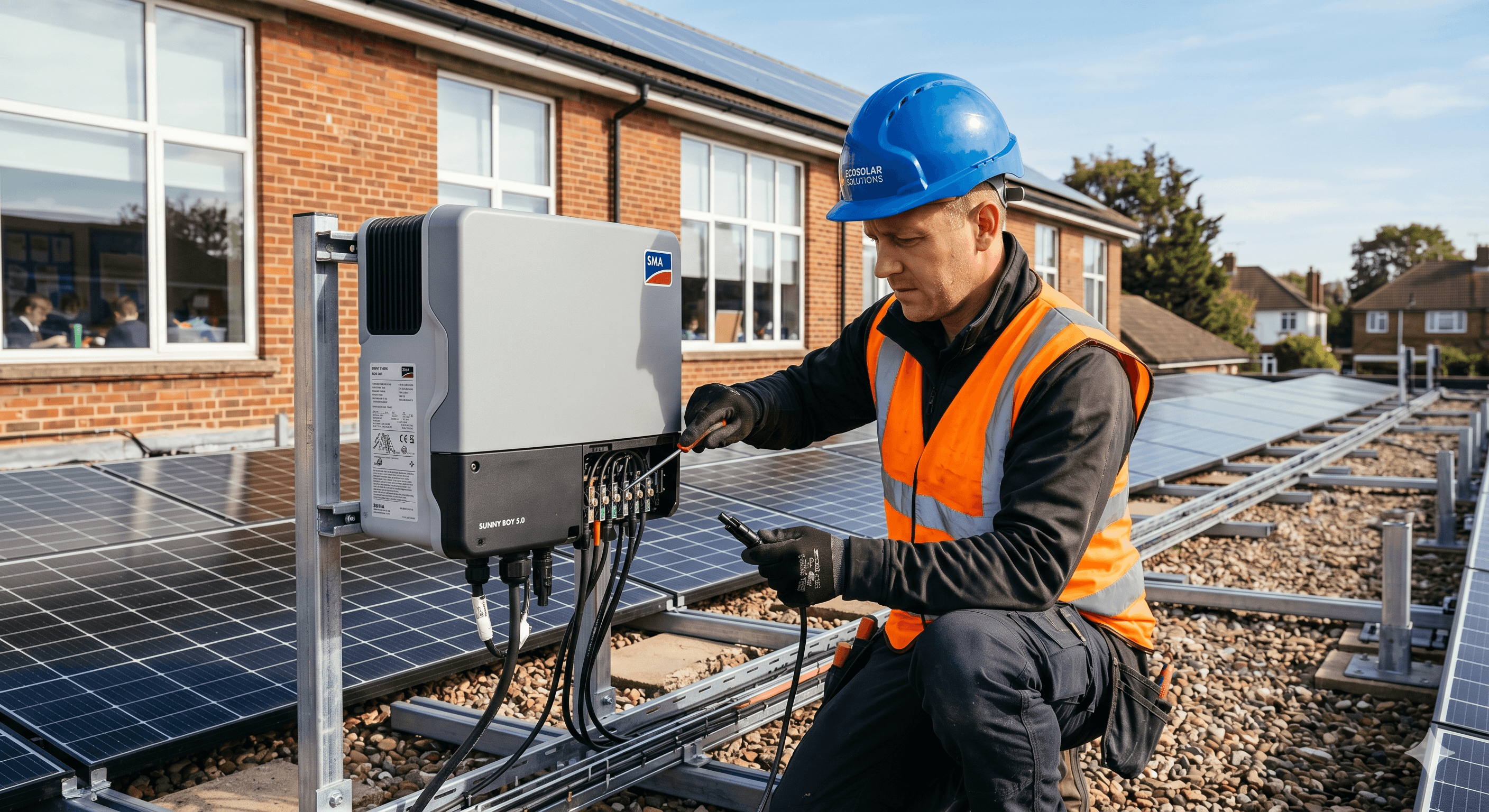
Solar at school sites is a genuinely strong fit. Term-time daytime usage matches generation. Multi-site estates create scale. Roofs are usually owned and structurally suitable. But solar generation interacts with energy supply contracts in ways that matter. A contract signed now without considering future solar might lock in volume commitments or minimum-spend clauses that become expensive when on-site generation starts displacing grid consumption.
If solar is on the trust's roadmap for the next 1-3 years, the supply contract should be specified with that in mind. Ask the broker to model the contract economics with and without future solar generation factored in.
Are we comparing against the Public Sector Decarbonization Scheme route?
Trusts have access to public sector funding routes that purely commercial buyers don't. The Public Sector Decarbonisation Scheme and Salix funding can support capital investment in renewable infrastructure and energy efficiency. These routes are slow, partially funded, and bureaucratic, but they're real, and they change the financial calculus for solar and heat decarbonisation.
A no-capex PPA route may still beat them on speed and simplicity, but the trust's procurement team should know both options exist and have modelled the comparison. The cheapest electricity over 25 years isn't always the one with the lowest kWh rate today.
What this means
If your trust is approaching a renewal in the next 6-12 months, send us your last 12 months of bills across the estate. Our broker partner will run a wholesale market comparison and we'll do a preliminary solar suitability check across the sites. You'll have a real answer to all five questions above within five working days, and a defensible position when you go to the board.